
Blog
How to Choose the Right MOSFET for Your Project

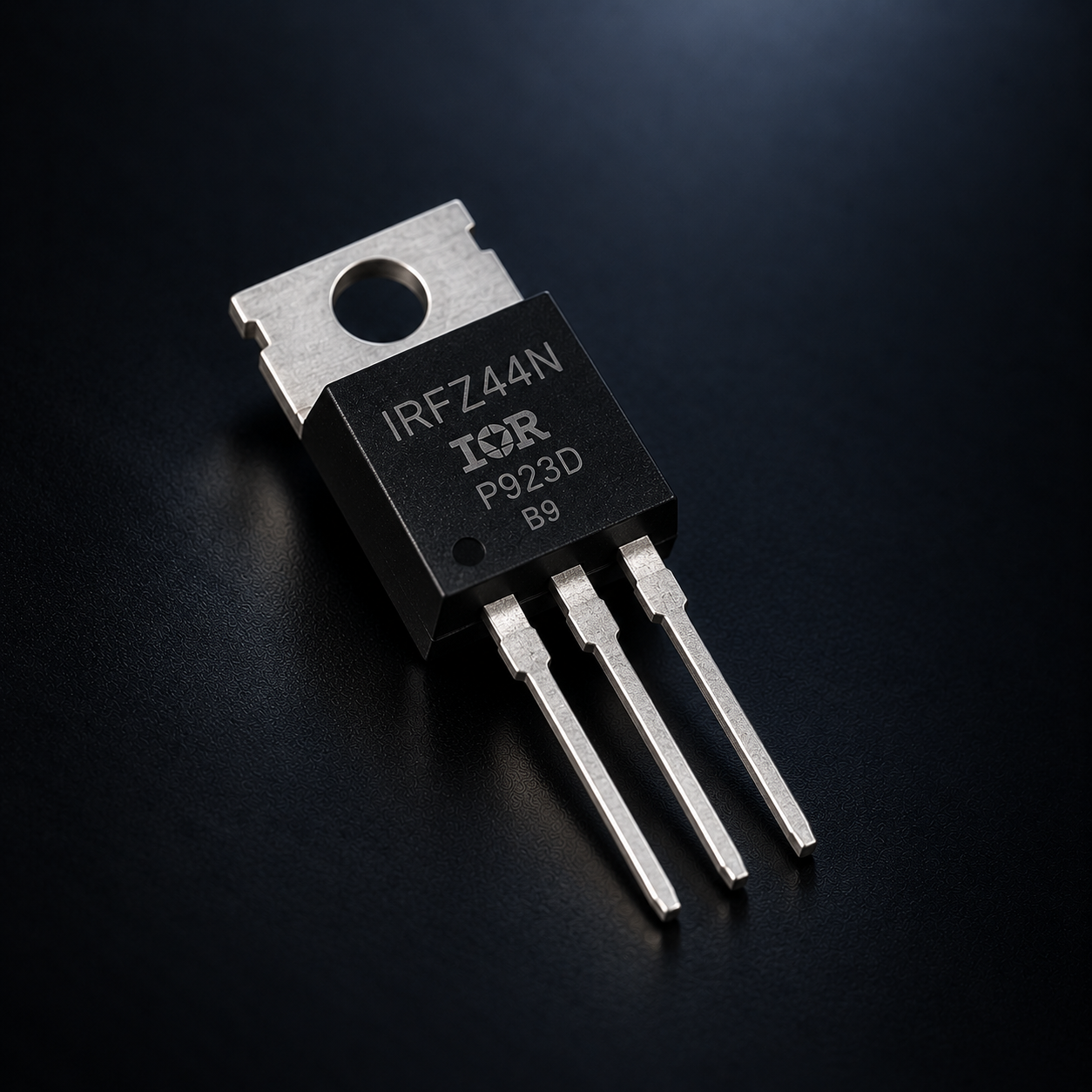
A MOSFET is the workhorse switch of modern electronics — it drives motors, LED strips, relays and power rails. Picking the wrong one usually shows up as a part that runs hot or never fully turns on. Here is a quick checklist.
1. N-channel or P-channel
N-channel MOSFETs are the default for low-side switching (between the load and ground) and usually offer lower on-resistance for the price. P-channel parts are handy for high-side switching when you want the load referenced to ground.
2. Voltage rating (VDS)
Choose a drain-source rating well above your supply, ideally 1.5–2×. Inductive loads like motors and relays create voltage spikes when they switch off.
3. Current and on-resistance (RDS(on))
Heat is roughly I² × RDS(on). At 5 A, a 0.05 Ω part dissipates about 1.25 W — more than a TO-220 package handles comfortably without a heatsink. Lower RDS(on) means less heat.
4. Gate drive — the most common mistake
VGS(th) is only where the MOSFET starts to conduct. Check the RDS(on) figure at the gate voltage you can actually supply. Standard parts like the IRFZ44N are specified at 10 V; for a 3.3 V or 5 V microcontroller pin, pick a logic-level MOSFET such as the IRLZ44N, or use a gate driver.
5. Protect the circuit
Add a flyback diode across inductive loads, a gate resistor (around 100 Ω) to tame ringing, and a pull-down resistor (around 10 kΩ) so the MOSFET stays off while your microcontroller boots.
Quick checklist
- Channel type
- VDS with headroom
- Current and RDS(on) at your gate voltage
- Package and cooling
- Protection parts
